
Driving along one of Norway’s well maintained highways, the E6, one could be forgiven for missing them. But here and there are dotted brown signs pointing to ‘helleristninger’, or rock art or rock carvings – some estimated to date back as far as 9,000 years. I got to visit some of them on a road trip this summer.
I was looking specifically for representations of whales. Many people are aware that Norway is one of Europe’s best places to go whale watching, particularly in the Arctic seas off Andenes and Skjervøy. But there’s another kind of ‘whale watching’ that you can do from land, if you know where to look. For up and down Norway’s western flank lies one of the world’s biggest collections of whale-motif rock art.

Curiously, many of these rock art sites are inland – today’s inland. At the end of the last Ice Age roughly 11,700 years ago, glaciers and ice that had covered Scandinavia for millennia began to recede, shifting the edge of accessible land with them. Sea levels were much lower, too.
Mostly in unassuming locations off a quiet residential street or a car park, you wonder what significance some of these sites might have had for people thousands of years ago. Most of the time, we were completely alone when seeing these sites, and there’s no charge or official ‘entrance’. You simply follow the signage and find it yourself.
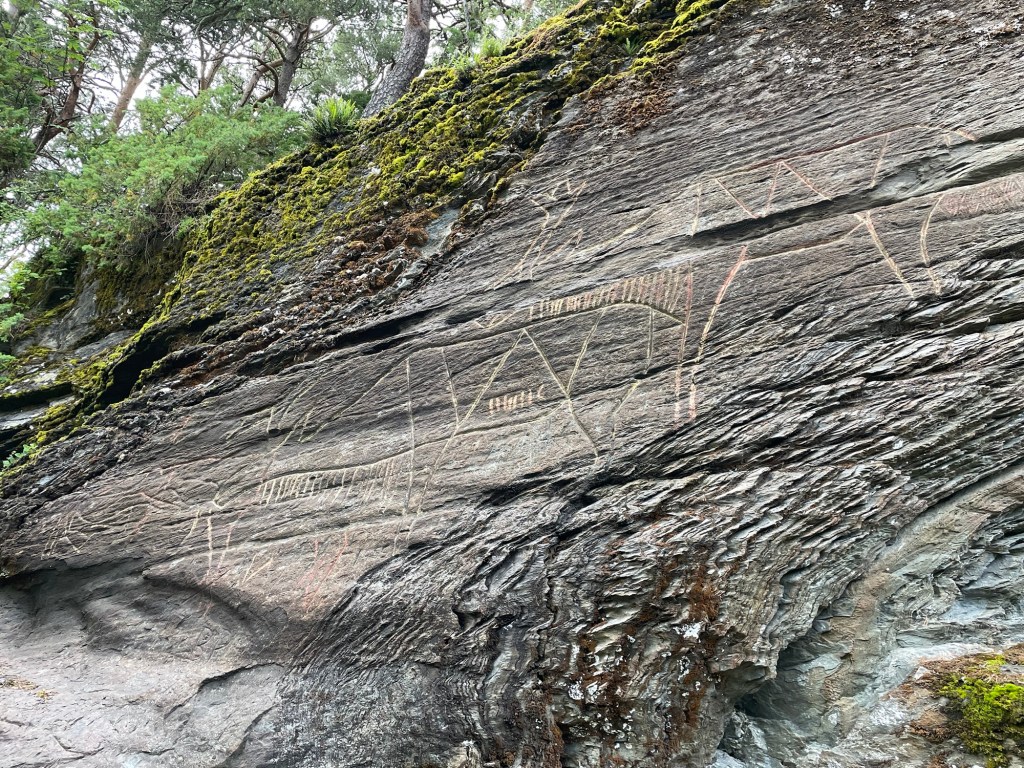

My hair stood up on end in the presence of some of these motifs. What I found most moving, especially at the site of a life-sized orca polished into a sweeping granite hillside in Leiknes, was the simple fact that the animals portrayed are so much the same animals that we have today. Reindeer, moose, porpoises, orcas, bears, what are self-evidently salmon: the peoples of the past encountered, ate, thought about, and possibly gave spiritual significance to these creatures.
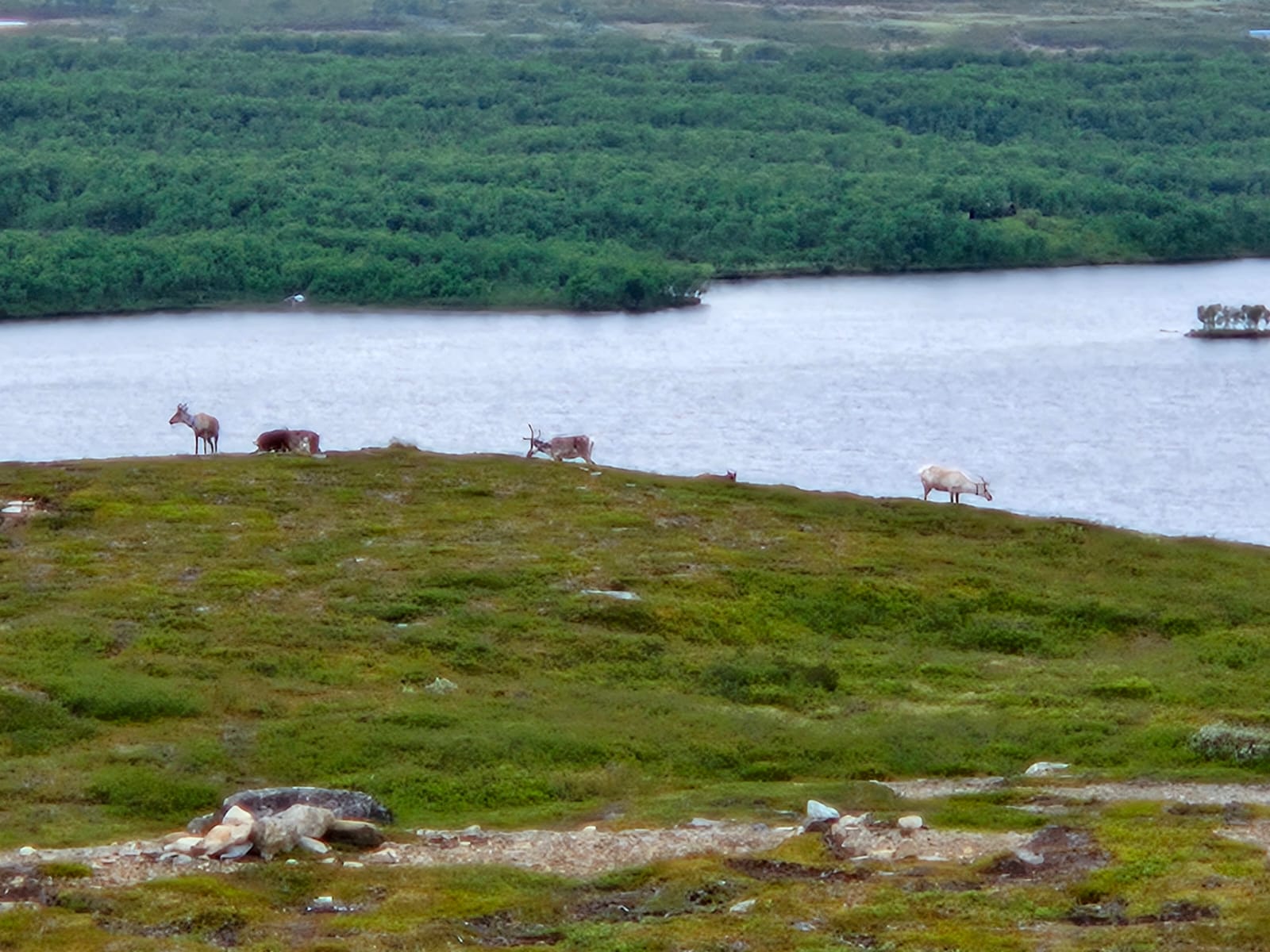
Reindeer have been hunted in Norway for at least 10,000 years, and written sources indicate that whaling dates back to the 9th century AD. The shock of recognition that comes with that continuous thread of meaning – the same animals – is what connects humans back then with humans now. This bridging of temporal divisions, sometimes many thousands of years, is one of art’s most important functions, as I seem to remember Knausgaard musing.
Interestingly, I didn’t see any dogs or wolves represented in the rock art I visited. Perhaps these animals were considered domesticated, and therefore not worthy of or necessary to depict artistically?

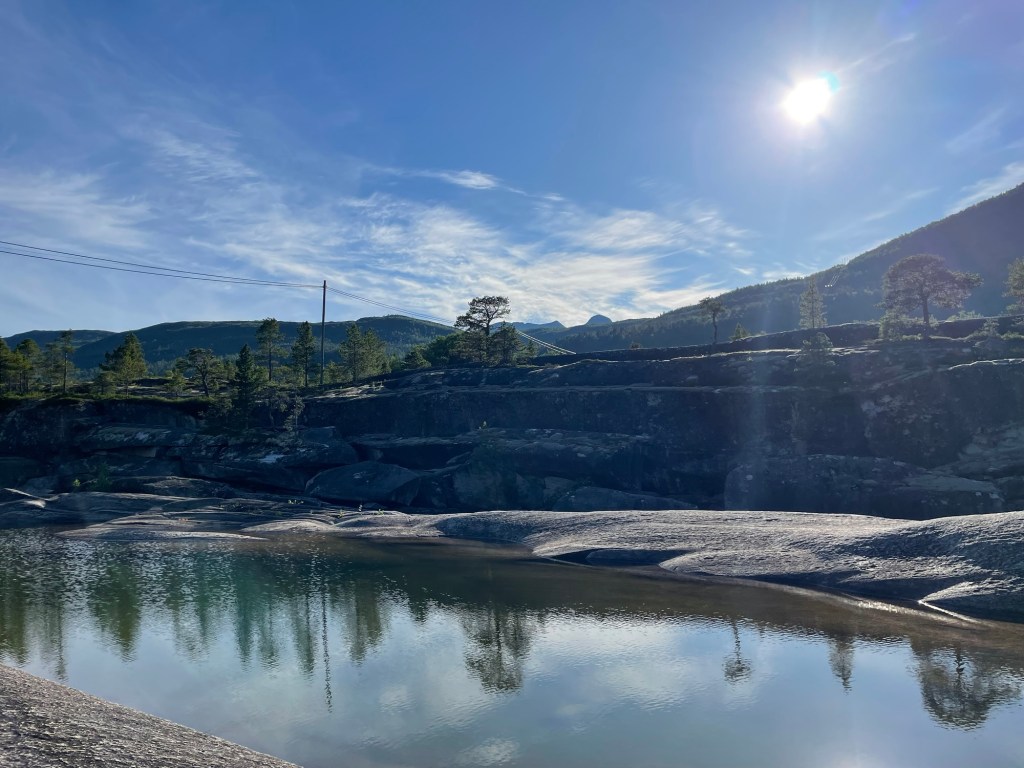
The site at Leiknes, in the northern part of Nordland county, is particularly special, featuring a veritable Noah’s Ark of overlapping animal motifs. The 7.62-metre-long orca is the highlight, but the realistic portrayal of geese/swans, bears, moose, and of course reindeer is remarkable once it comes into relief with the shadows cast by sunset.
Sitting on the south side of Vestfjord, the magnificent view gazes out at Lofoten, the famous mountainous island chain that juts out into the sea on Norway’s northwest coast. I felt an immense sense of peace and sat there for over an hour, having also arrived in the middle of the heatwave that lingered for three weeks in Norway this summer.


I highly recommend making the small detours to see these ancient rock art sites. Most of the time they are no more than a 10-minute walk from the main road. For me, it has deepened my appreciation for Norway’s ancient past as recorded in its sweeping landscapes, and the possible mythical associations people may have had with animals back then.
 no cash on the highway
I remember seeing these signs when I visited in 2017. This is quite incredible, the Orca is quite dramatic! I’m also surprised there are no painting of canines, though maybe they would be further north? Or maybe there are seals further north?
thanks for writing and sharing!
James
LikeLike
Thanks for the comment, James! If I remember correctly, there were some seal-like depictions, but I can’t be completely sure. They are really something special. Thanks for reading
LikeLike